
The global lanyard market is booming, with an estimated value of $3.73 billion in 2026 and projections suggesting it will reach $5.53 billion by 2035, according to Business Research Insights . In the U.S., the Advertising Specialty Institute (ASI) notes that “lanyards” consistently rank among the top 10 search terms used by distributors, highlighting their ongoing popularity and demand. North America, particularly the United States and Canada, remains a key hub for lanyard consumption. Widely embraced across industries—from corporate offices and educational institutions to healthcare facilities and event management—lanyards have grown far beyond simple accessories. Today, custom lanyards are not only a practical tool for security and organization but also a powerful medium for branding and promotional campaigns. In this blog, we’ll explore the materials, styles, and printing options that make custom lanyards such a versatile and essential choice for businesses and organizations alike.
I. General Structure of Lanyard
(1) Lanyard Material
What materials are available for custom lanyards, and which are best for corporate branding? The most common materials used for lanyards include polyester, nylon, cotton, silicone, RPET (Recycled Polyester), and cork. Below is a comparison of their advantages, disadvantages, and price ranges to help businesses choose the best option for branding:
Material |
Advantages |
Disadvantages |
Price Range / Notes |
Polyester |
Affordable, durable, low cost |
Rough texture, less soft than nylon |
Usually the cheapest option |
Nylon |
Shiny, premium feel, soft and durable |
Higher cost than polyester |
Mid-to-high range corporate lanyards |
Cotton |
Comfortable, breathable, skin-friendly |
Less durable, prone to wear |
Slightly more expensive than polyester |
Silicone |
Water-resistant, elastic, easy to clean, modern look |
Higher cost than standard textiles |
Ideal for sporty or modern lanyards, higher-priced |
Cork |
Eco-friendly, soft, lightweight, skin-friendly |
Higher cost |
Perfect for premium gifts or branded merchandise |
RPET |
Durable, lightweight, eco-friendly, good for printing |
Slightly stiff, limited color options |
Moderate cost, eco-friendly choice |
(2) Lanyard Structure: What Is a Standard Lanyard Made Of?
A standard custom lanyard typically consists of five
main components:
1.Lanyard Strap – The main body for logo printing; materials used include polyester, nylon, cotton, and
silicone.
2.Printing/Decoration Layer – Methods include screen printing, heat transfer, woven labels, and epoxy coating.
3.Safety
Feature – Breakaway clasp to prevent injury.
4.Attachment Hardware – Options include lobster clasps, badge clips, key rings, and D-rings
for secure attachment.
5.Additional Accessories – Features like adjustable sliders, phone holders, and multi-clip attachments for
enhanced functionality.
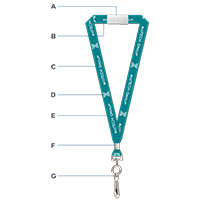
Lanyard Connection Types:
1:Metal crimp
2:Sewn
3:Slider
Common Lanyard Attachment Hardware:
Hardware Type |
Picture |
Features |
Common Uses |
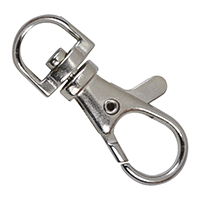
Lobster Clasp |
|
Spring-loaded metal hook, easy to open and close, secure attachment |
Keys, ID badges, USB drives, promotional lanyards |
Badge Clip |
|
Flat clip designed to hold badge slots or holes, often metal or plastic |
ID cards, name badges at offices, events, conferences |
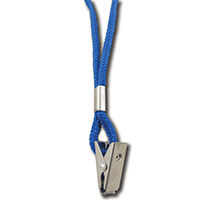
Alligator Clip |
|
Strong serrated jaws for gripping fabric or cards without holes |
Badges without slots, clothing attachment, event passes |
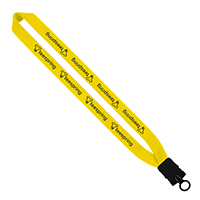
Breakaway Clip |
|
Safety feature that separates under tension |
Workplace, schools, child-safe or medical environments |
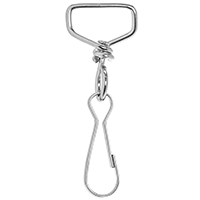
J-Hook |
|
Simple J-shaped metal hook, lightweight and easy to attach |
Name tags, lightweight badges, promotional lanyards |
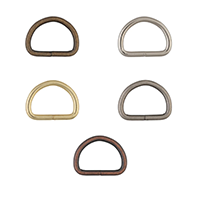
D-Ring |
|
D-shaped metal ring providing a fixed attachment point |
Holding keys, tools, or combining multiple accessories |
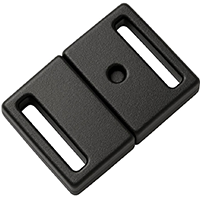
Snap Buckle |
|
Plastic buckle with quick-release function |
Detachable lanyards, access cards, outdoor or sports use |
Split Ring |
|
Circular metal ring similar to a keyring, very secure |
Keys, key holders, long-term attachments |
Cell Phone Connector |
|
Loop or tether designed to attach phones securely |
Phone lanyards, anti-drop phone straps |
| Carabiner |
| Durable clip with spring gate, some with locking option | Tools, outdoor gear, heavy-duty lanyards |
Cord Lock |
|
Adjustable barrel lock for tightening or loosening cords |
Adjustable lanyards, drawstring straps |
Phone Tether Tab |
|
Thin tab inserted inside phone case with attachment loop |
Phone lanyards, crossbody phone straps |
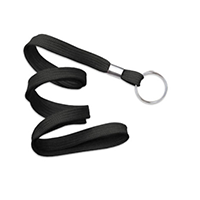


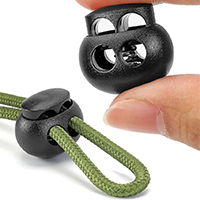
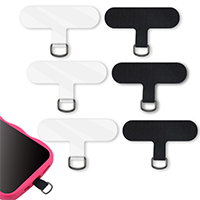
Common Items That Can Be Attached to a Lanyard:
Identification & Access |
Keys & Key Accessories |
Electronics & Devices |
Work & Tools |
Event & Promotional Items |
Safety & Utility |
Personal & Lifestyle |
Specialty Attachments |
ID holder / ID badge |
Keys
|
USB flash drive
|
Whistle
|
Event pass |
Safety ID card |
Wallet / card pouch |
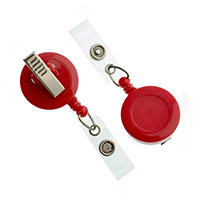
Retractable badge reel |
(3) Lanyard Length and Width
The length and width of a lanyard impact brand visibility. Common widths include 10mm, 15mm, and 20mm, with standard lengths ranging from 45–55cm (17.7–21.7 inches). This area is the main space for printing logos or text, making it essential for corporate branding. Choose the right width to ensure your logo/message is clear and legible.
(4) Lanyard Types/Styles:
| Flat | Round | Woven strap |
|
|
|


II. Custom Lanyard
(1) What Are the Effects and Suitable Applications of Different Printing Methods?
|
Printing Method |
Features |
Best For / Applications |
|
Screen Printing |
Most common and cost-effective; works well for single-color or limited-color logos |
Large-volume corporate lanyards; simple text or graphics |
|
Heat Transfer / Sublimation |
Full-color, gradient, or photo designs; pattern transferred directly onto the strap |
Full-print designs; youthful, design-focused brands |
Woven / Jacquard |
Logo woven directly into the lanyard; part of the strap structure, not printed |
Premium brands; long-term use, fade-resistant |
PVC / Silicone Logo (Embossed) |
3D, tactile logos; often used as accents |
Brand recognition; trendy or gift lanyards |
Digital Printing |
Similar to digital printing on paper; suitable for small runs and multiple designs |
Small batch customization; fast prototypes |
Embossed / Debossed |
No color change; logo formed via pressing or stamping |
Silicone lanyards; minimalist brand style |
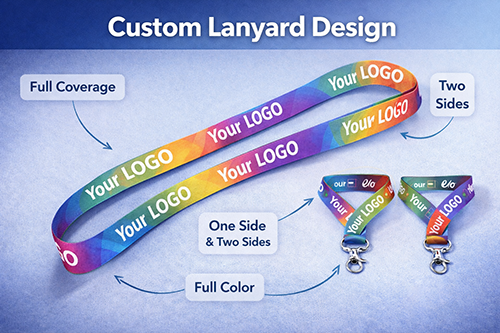
(2) What Are the Differences Between Full-Coverage, One Side, Two Sides and Full Color?
Full Coverage |
High visual impact,relies on heat transfer; higher production cost. |
outhful brands & event promotions |
One Side |
Lowest cost – usually solid-color back; ideal for large-volume orders. |
Large-volume orders with limited budget |
Two Sides |
Enhanced visibility – logo remains visible even when the lanyard rotates. |
Trade shows & employee ID badges |
Full Color |
Best color reproduction – achieved with heat transfer or digital printing; not suitable for screen printing or woven labels. |
Not suitable for screen printing or woven labels |
(3) The Length of the Lanyard
Neck lanyard |
50cm ⭐ |
Most popular |
Wrist lanyard |
18–20cm ⭐ |
Standard fit |
(4) How to Choose the Right Width for a Lanyard?
Width |
Features |
Uses |
10mm |
Lightweight |
Event passes |
15mm ⭐ |
Balanced & professional |
Employee IDs |
20mm |
Heavy-duty |
Keys, factories |
25mm |
Extra strength |
Tools & equipment |
III. What Is a Lanyard Used For?
Custom lanyards are widely used in corporate settings for five main categories:
ID & Badge Holders – Employee IDs, staff passes, trade show badges.
Access Control & Functional Cards – RFID cards, employee cards, parking cards.
Keys & Everyday Carry Items – Keys, USB drives, tools.
Phones & Electronic Devices – Mobile phones, walkie-talkies.
Promotional Gifts & Branded Merchandise – Corporate gifts, promotional giveaways.
IV. Key Considerations When Customizing Corporate Lanyards
When ordering custom lanyards for business use, companies typically consider:
Usage & Application – ID badges, trade shows, promotional giveaways.
Material Choice – Polyester, nylon, cotton, silicone, eco-friendly options.
Color & Brand Consistency – Match your brand palette for maximum visibility.
Width & Length – Affects comfort and visibility of the logo/message.
Attachments & Accessories – Add breakaway clips, hooks, and badge clips for better functionality.
Printing & Customization Techniques – Choose between screen printing, heat transfer, or woven logos based on your design needs.
Budget & Order Quantity – Bulk orders can help reduce costs and ensure your lanyard is affordable.
V. Why Custom Lanyards Matter for Businesses?
Brand Visibility & Promotion – Custom lanyards are an affordable way to increase brand exposure at trade shows, conferences, and employee events. They act as high-frequency marketing tools, creating brand impressions.
Employee Identification & Security – Lanyards help with quick identification and security by holding access cards, badges, and IDs.
Event Management & User Experience – Ideal for exhibitions and team-building events, personalized lanyards enhance user experience while offering practicality and engagement.
VI. Popular Styles and Design Trends
Multi-functional lanyards have become a trend in corporate customization and promotional gifts. They serve not only as ID badge holders but can also carry small tools and electronics. Some popular styles include:
Cable Lanyard
USB Lanyard
Phone Lanyard
LED Lanyard
Lanyard with Badge Reel
Looking for the Right Custom Lanyard Solution for Your Business?
We offer a wide range of customizable lanyards including neck lanyards, wrist lanyards, and multi-functional lanyards. We support low minimum order quantities with flexible production options. Contact us today to receive a tailored customization plan and competitive quote.
FAQ – Custom Lanyards for Businesses
1. What factors affect the price of custom lanyards?
The price depends on material, width, length, printing method, hardware type, and order quantity.
2. What materials are available for custom lanyards?
Common materials include polyester, nylon, satin, woven fabric, and eco-friendly recycled options.
3. Which printing methods can be used on custom lanyards?
Popular options are screen printing, sublimation, heat transfer, and woven designs.
4. How long does it take to produce custom lanyards?
Production usually takes 7–15 business days, depending on quantity, complexity, and customization.
5. Can I choose different attachments for lanyards?
Yes, options include lobster clasps, swivel hooks, split rings, breakaway clips, and badge reels.
6. Are there minimum order quantities for custom lanyards?
Most suppliers require 50–100 pieces, but some offer low MOQ options for smaller businesses or events.